
· by Michael Blair, Nashville's Water Filtration
A glass of water that smells faintly like a swimming pool is one of the most common reasons people ask us about filtration in Nashville. The smell is not a sign that something has gone wrong. It is chlorine, left in the water on purpose, and its strength rises and falls from day to day and street to street. Whether it is worth removing is a question of taste rather than safety, and if you do want it gone, the equipment is simple and inexpensive compared with most water treatment. Here is where the smell comes from, how much of it is there, and what takes it out.
Why does my tap water smell like chlorine?
Tap water smells like chlorine because the utility leaves a small amount of disinfectant in it on purpose. The CDC’s page on water disinfection with chlorine and chloramine explains that utilities add it to kill germs, and that the low level remaining keeps working as the water travels through the pipes to your tap. The same page says water treated with chlorine can taste and smell different from untreated water or water treated with chloramine.
Metro Water Services describes its own process in its 2020 consumer confidence report: after filtering, it adds a small amount of bleach to disinfect the water. Its 2019 report explains that the bleach is made at the plant by running a salt brine through an electrical cell, a method that replaced the chlorine gas it used before.
How much chlorine is in Nashville tap water?
Nashville tap water carried an average of 1.56 milligrams of chlorine per liter in 2020, according to the data table in Metro’s 2020 report, with readings that ranged from 0.8 to 3.3. The limit in that table is 4, the maximum residual disinfectant level. The CDC says chlorine or chloramine up to 4 mg/L is considered safe in drinking water and unlikely to make people sick.
That range is the reason the smell comes and goes. The CDC notes that taste and smell problems may increase with higher chlorine levels, and a reading near the top of Metro’s range is roughly four times one near the bottom. If the smell is new, or much stronger than usual, it is worth checking the latest report for your utility. Homes in the outer counties may be served by a different utility, and its report says which disinfectant it uses.
Does a carbon filter remove chlorine from tap water?
A carbon filter does remove chlorine from tap water, and taste and odor are the easiest things it handles. University of Nebraska–Lincoln Extension’s guide to activated carbon filtration says activated carbon can be effective at removing chlorine, chloramines and some disinfection byproducts, and that less carbon is generally needed for taste and odor compounds than for byproducts such as trihalomethanes. It also says carbon does not remove bacteria, hardness minerals, fluoride or nitrate, so a carbon filter is not a softener.
The same guide says carbon cartridges must be replaced regularly, because once the carbon is full the contaminants pass through. A filter is only worth what its certification says, so we look for the specific model in NSF’s listings for Standard 42, the standard for aesthetic effects such as chlorine reduction and taste and odor. Our post on when to change a water filter covers the timing.
Should you filter chlorine at the sink or the whole house?
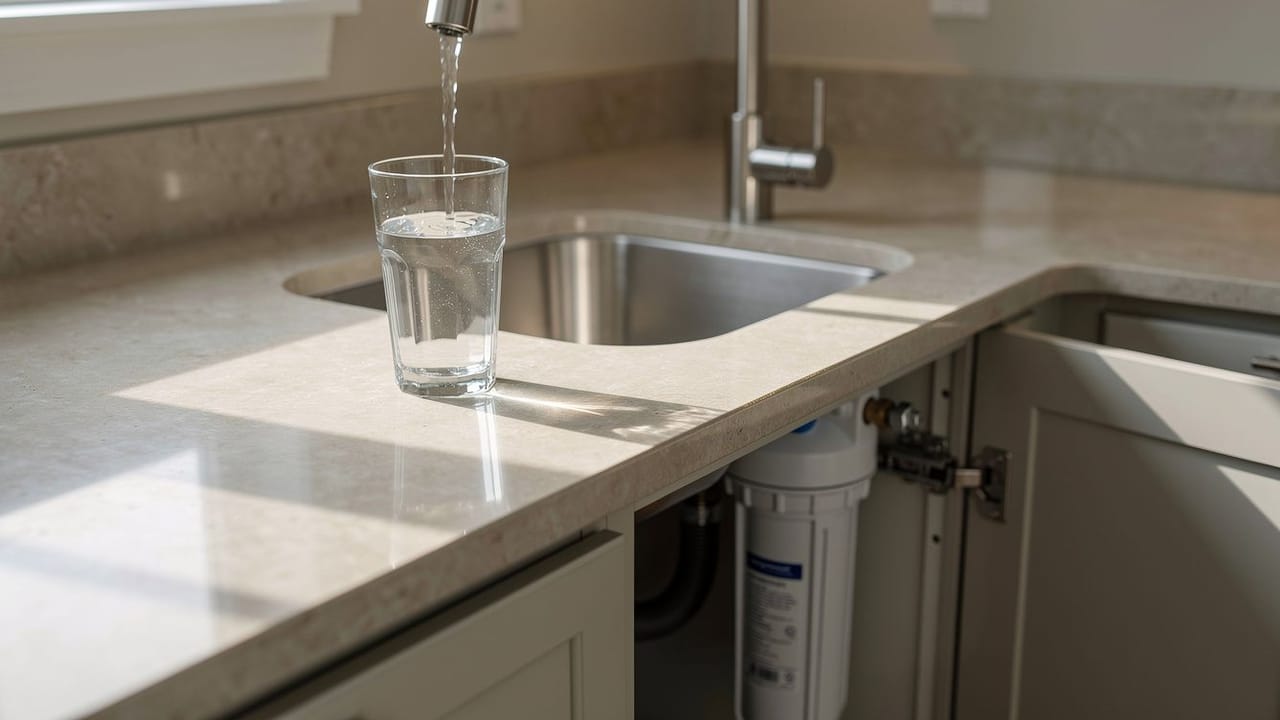
Filter chlorine at the sink if it only bothers you in drinking water and coffee, and at the whole house if it bothers you in the shower too. An under-sink carbon filter on the cold line handles the glass of water, which is all most households need. The cartridge in the refrigerator door does a smaller version of the same job, as our post on refrigerator water filters explains.
A whole-house carbon filter goes on the main line and treats every tap, including the showers and the laundry. It has to be sized to the flow the house uses at once, not to a glass at a time, and we put a sediment stage ahead of it. If a softener is in the house as well, the order of the two matters, so we look at both together. A water test at your tap tells you the chlorine level you actually have before choosing either. To talk it through, ask us for an estimate.
Sources
- CDC, About Water Disinfection with Chlorine and Chloramine — Utilities add disinfectant to kill germs; low levels keep working through the pipes; up to 4 mg/L considered safe; chlorinated water can taste and smell different; taste and smell problems may increase with higher chlorine levels.
- Metro Water Services, 2020 Consumer Confidence Report — A small amount of bleach used to disinfect; 2020 chlorine average 1.56 mg/L, range 0.8–3.3, MRDL 4
- Metro Water Services, 2019 Consumer Confidence Report — On-site generation of bleach from salt brine through an electrical cell, replacing chlorine gas
- University of Nebraska–Lincoln Extension, Drinking Water Treatment: Activated Carbon Filtration (G1489) — Carbon removes chlorine, chloramines and some disinfection byproducts; less carbon needed for taste and odor than THMs; does not remove microbes, hardness, fluoride or nitrate; cartridges must be replaced regularly
- NSF, Certified Drinking Water Treatment Units, NSF/ANSI 42 listings — Model-by-model listings for aesthetic claims such as chlorine reduction and taste and odor reduction
FAQ
Tap Water That Smells Like Chlorine, and What Removes It — questions
Is it safe to drink tap water that smells like chlorine?
Yes, at the levels utilities use. The CDC says chlorine or chloramine up to 4 mg/L is considered safe in drinking water and unlikely to make people sick, and Metro’s 2020 report averaged 1.56 mg/L. The smell is a matter of taste. A sudden, very strong smell is worth a call to your utility.
Does Nashville use chlorine or chloramine in its water?
Metro Water Services’ reports describe disinfecting with bleach made at the plant from salt brine, and its 2020 report lists the residual as chlorine, averaging 1.56 mg/L. Homes served by other utilities in the surrounding counties should check their own utility’s annual report, which names the disinfectant it uses.
Why does my tap water smell more like chlorine some days?
The chlorine level in the water changes. Metro’s 2020 report shows readings from 0.8 to 3.3 mg/L over the year, and the CDC notes that taste and smell problems can increase as chlorine levels rise. A stronger smell for a few days usually reflects a higher level in the mains that week.
What kind of filter removes chlorine taste from drinking water?
Activated carbon. University of Nebraska–Lincoln Extension says carbon filtration can remove chlorine and chloramines, and that taste and odor need less carbon than disinfection byproducts. Look for the exact model in NSF’s Standard 42 listings for chlorine reduction, and replace the cartridge on schedule, since a full one stops working.