
· by Michael Blair, Nashville's Water Filtration
Water filters are sold with a rated life and installed with good intentions, and then they sit. The failure is not dramatic, which is the problem. A filter past its capacity does not stop the water, so nothing tells you it has stopped doing anything useful.
What does the rated life on a filter box mean?
Filter capacity is expressed in gallons, tested under laboratory conditions with a specified contaminant at a specified concentration. Your water is not that water. Sediment-heavy supply or a private well will exhaust a cartridge well before its rated gallons, and light use on clean municipal water may reach it.
The months figure printed alongside is an estimate built on an assumed household consumption. It is a reasonable default and it is not a measurement. Two identical filters in two Nashville houses can reach the end of their useful life several months apart.
Why an old cartridge is worse than none
A carbon block filter works by adsorption, holding contaminants on an enormous internal surface area. Once that surface is occupied, it stops adding and, under changing flow and pressure, can release some of what it holds back into the water.
The second issue is biological. A carbon filter is damp, dark and full of organic material, which is a good environment for bacterial growth, particularly in a filter that sits unused for periods. That is why manufacturers specify a time limit as well as a volume, and why a cartridge left in over a long absence should be replaced rather than resumed.
- Sediment prefilter: first to clog, cheapest to replace
- Carbon block: replace on schedule even at low use
- Reverse osmosis membrane: years rather than months, but only behind good prefilters
- Replace any cartridge left standing unused for months
- Pressure drop indicates a clogged prefilter, not a spent carbon block
What are the signs a water filter needs changing?
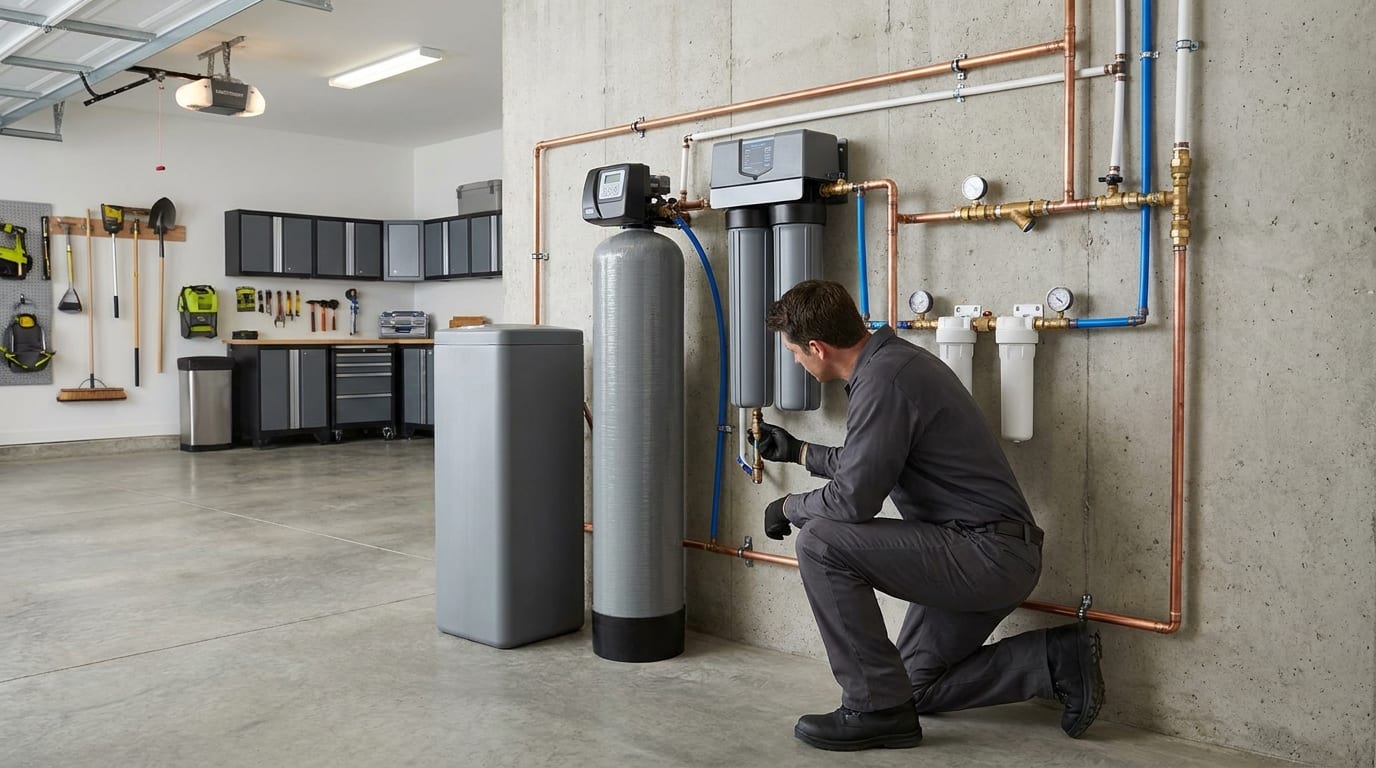
A drop in flow means the sediment prefilter is loading up, which is what it is for. On a whole-house system a pressure gauge before and after the housing turns this into a number, and a widening gap is the clearest possible signal.
Taste and smell returning means a carbon stage is exhausted. Neither indicator works for contaminants you cannot taste, which is the argument for keeping to the schedule rather than waiting for a symptom. Writing the date on the housing with a marker at each change is the most effective method anyone has found.
The Middle Tennessee specifics
Nashville municipal water is treated and disinfected, and much of what a household filter is doing here is improving taste and removing chlorine and its byproducts rather than making unsafe water safe. That means the consequence of a late change is quality rather than an immediate hazard.
Hardness is the local variable that shortens equipment life. Mineral scale accumulates on a reverse osmosis membrane and inside filter housings, which is why an RO system in hard water benefits from a softener ahead of it, and why the membrane in an unsoftened Middle Tennessee house will not reach the life it would elsewhere.
FAQ
When to Change a Water Filter Cartridge — questions
What happens if I never change a water filter?
Flow drops as the sediment stage clogs, and the carbon stage stops removing anything long before that. A spent filter can also release captured material back into the water under flow changes, and a damp exhausted cartridge can support bacterial growth. It moves from useless toward counterproductive rather than staying neutral.
How often should a refrigerator filter be replaced?
Manufacturers typically specify around six months or a rated volume, whichever comes first, and the time limit matters as much as the volume in a household that does not use the dispenser heavily. The indicator light on most refrigerators counts water through the line rather than measuring the filter, so it is an estimate.
Do I need to sanitize the housing when changing a cartridge?
It is good practice on whole-house and under-sink systems, and it takes a few minutes: wash the housing, rinse it, and follow the manufacturer instructions for any sanitizing step. The housing has held a damp filter for months, and putting a clean cartridge into a fouled housing gives away part of what you just paid for.
Do whole-house water filters reduce water pressure?
They can as the cartridge loads up. A sediment prefilter catching what it is meant to catch slowly restricts the flow, and that drop is the sign it needs changing. A pressure gauge before and after the housing makes it a number, and a widening gap between the two readings is the clearest signal to replace it.