
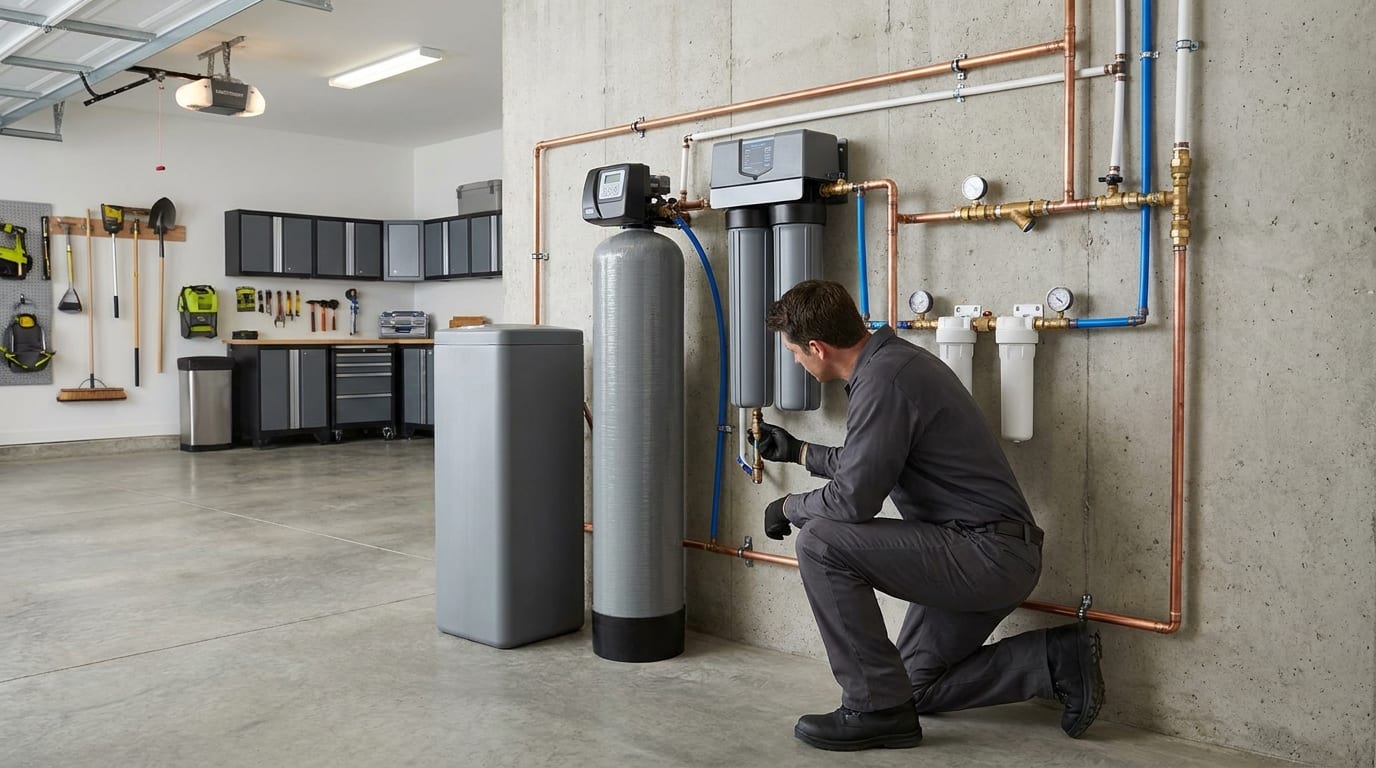
Water Filtration · Nashville, TN
Water filtration and softeners in Nashville, TN
Whole-home filtration, softeners, reverse osmosis and well water treatment specified from an actual water test, not a sales script.
Estimate request
What is wrong with the water at your tap?
Straight to us, and a reply the same day.
Nashville's Water Filtration
Nashville's Water Filtration is a water filtration and treatment company based in Nashville, Tennessee, working 65 towns across 12 counties of Middle Tennessee. Water treatment specialists who test first, size the system to the house, and tell you what the water actually needs.
More about who we are, what we commit to, and who answers for this site.
What we fix
Spotted glasses, sulfur smell, soap that will not lather
Recognize one? You are in the right place.
- Spots on glasses and fixtures
- Water smells of chlorine or sulfur
- Soap will not lather
- Staining in sinks and toilets
- On a well and unsure what is in it
- Buying bottled water for drinking
Services
Testing, softeners, RO and whole-home filters
Everything we handle, and what each one actually covers.
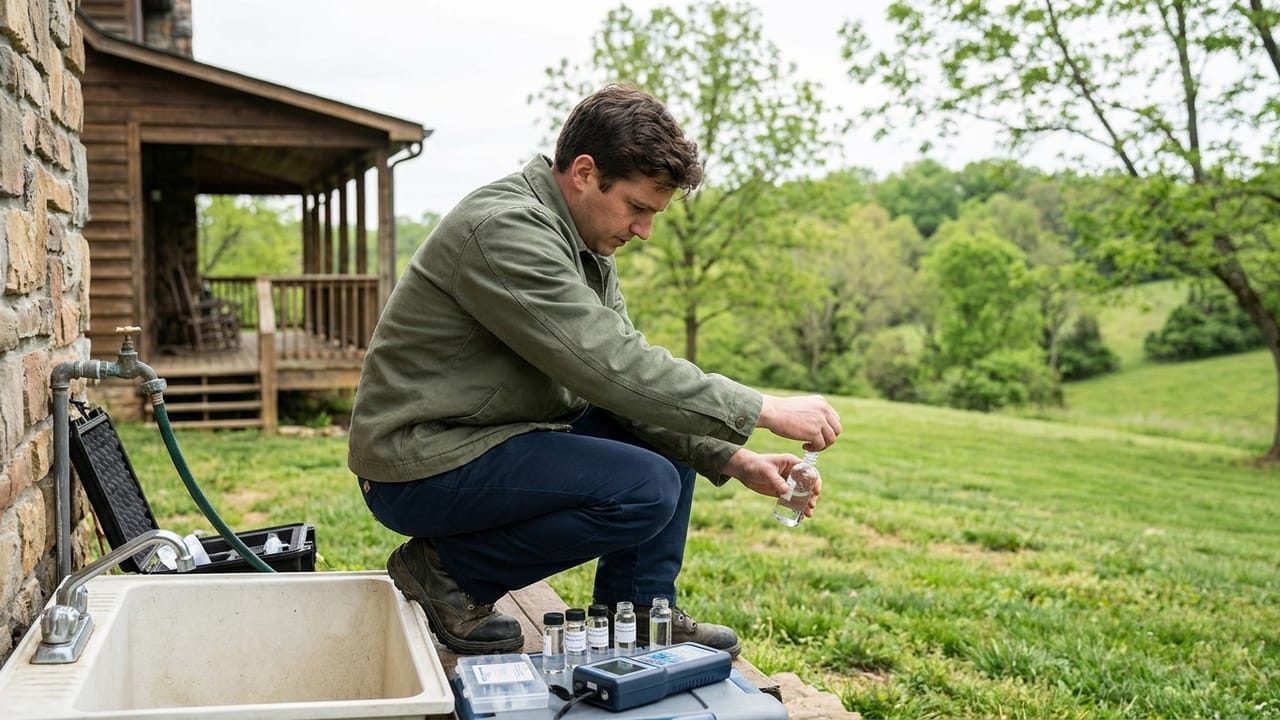
Water Testing
A proper test of what is actually in your water — hardness, chlorine, iron, sulfur, bacteria — before anything is recommended.
Learn more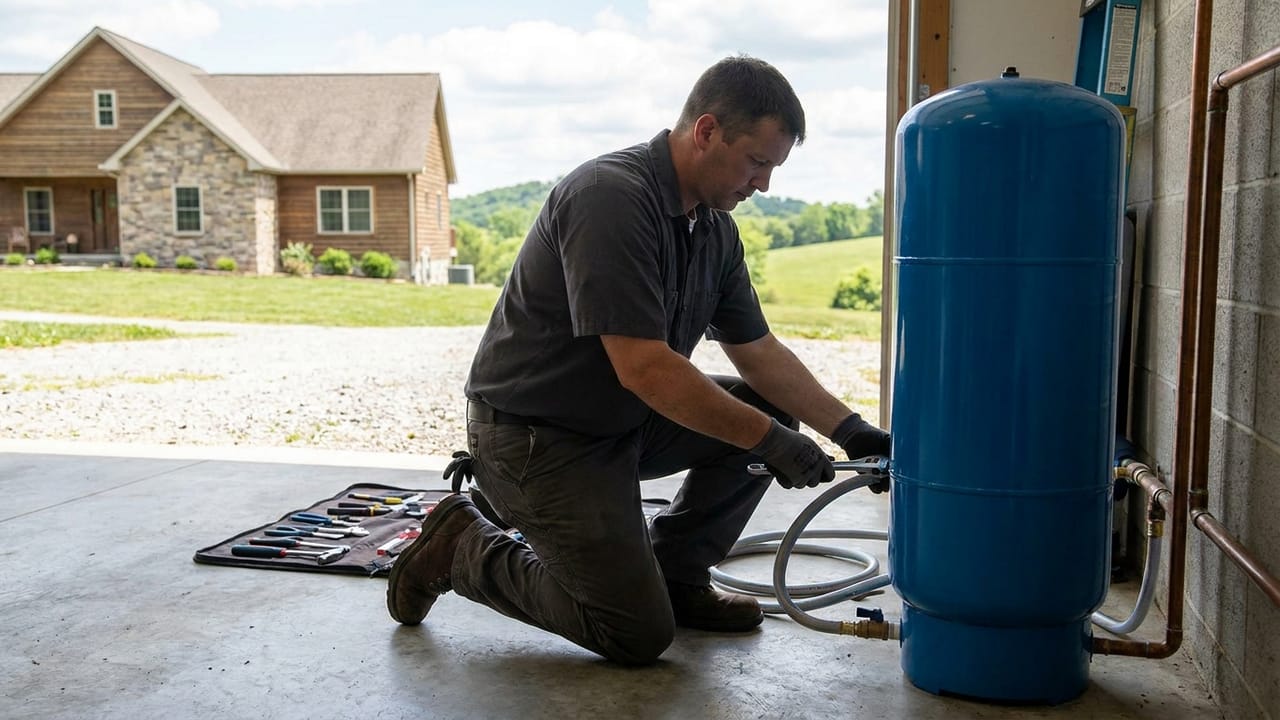
Whole-Home Filtration
Carbon and sediment filtration at the point of entry, sized to your household and your flow rate.
Learn more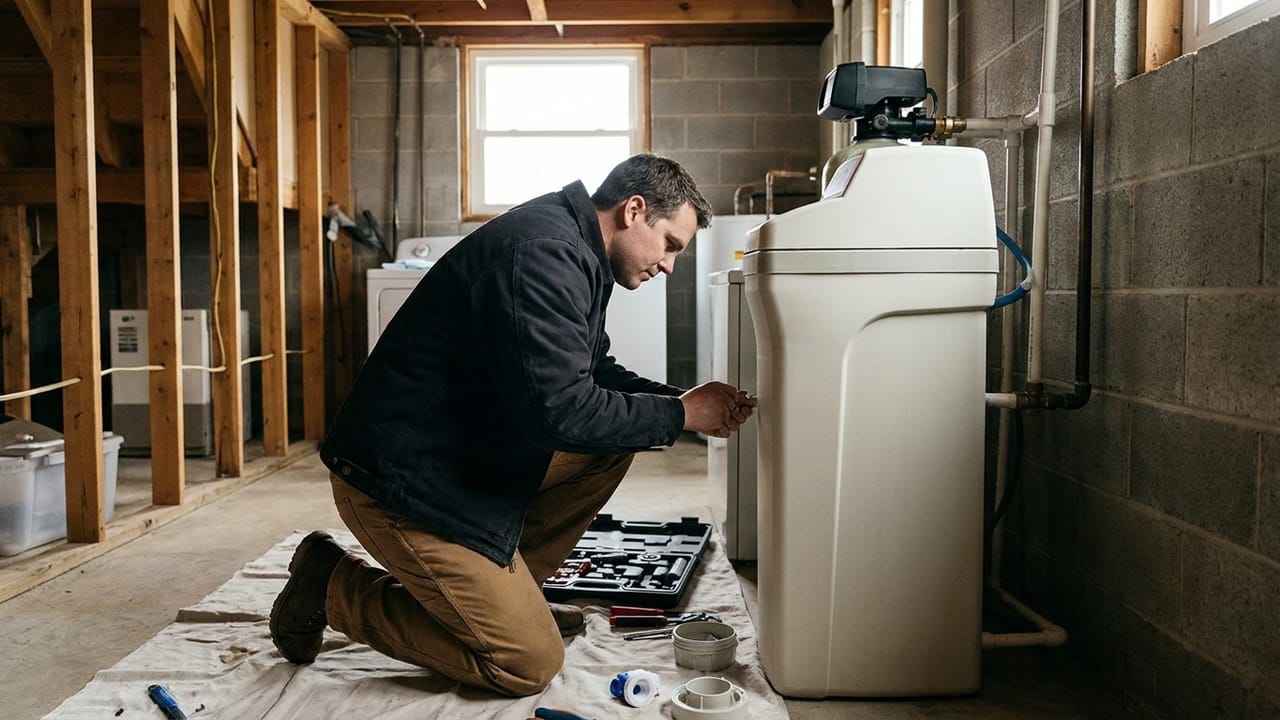
Water Softeners
Sized to your hardness and water use, so it regenerates on demand rather than on a timer that wastes salt and water.
Learn more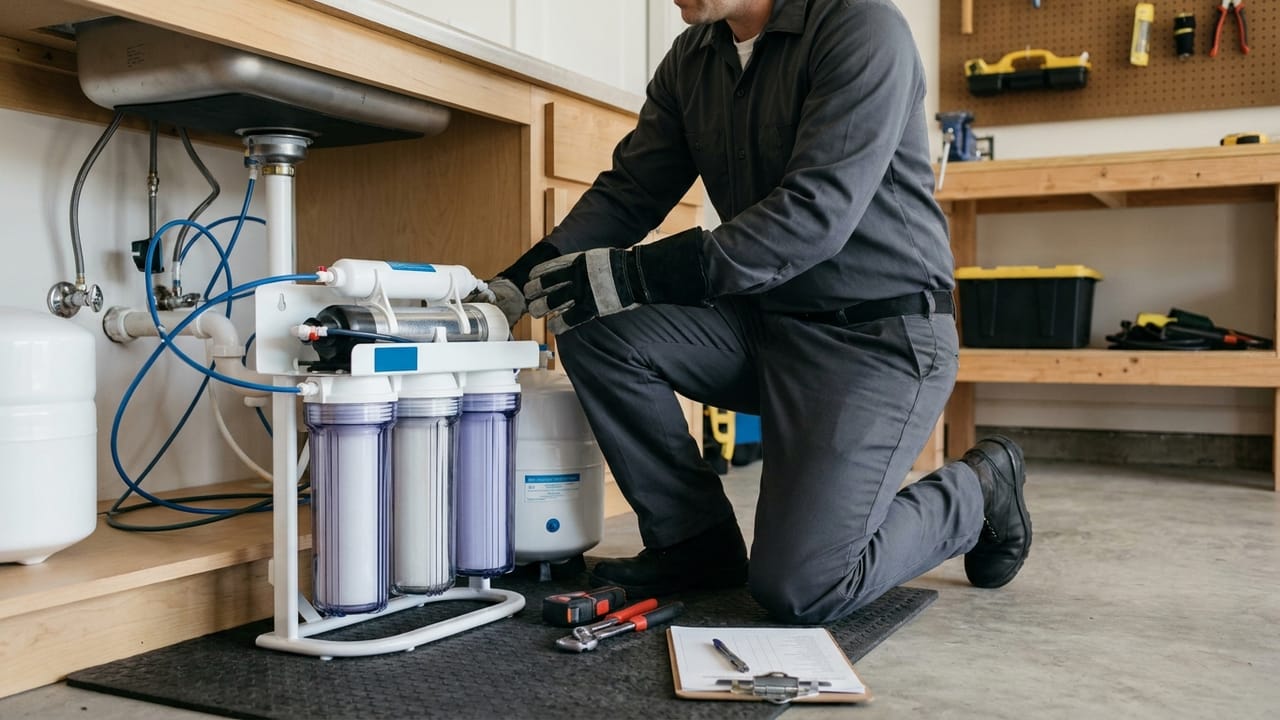
Reverse Osmosis
Under-sink and whole-home RO for drinking and cooking water, with the remineralization that makes it taste like water.
Learn more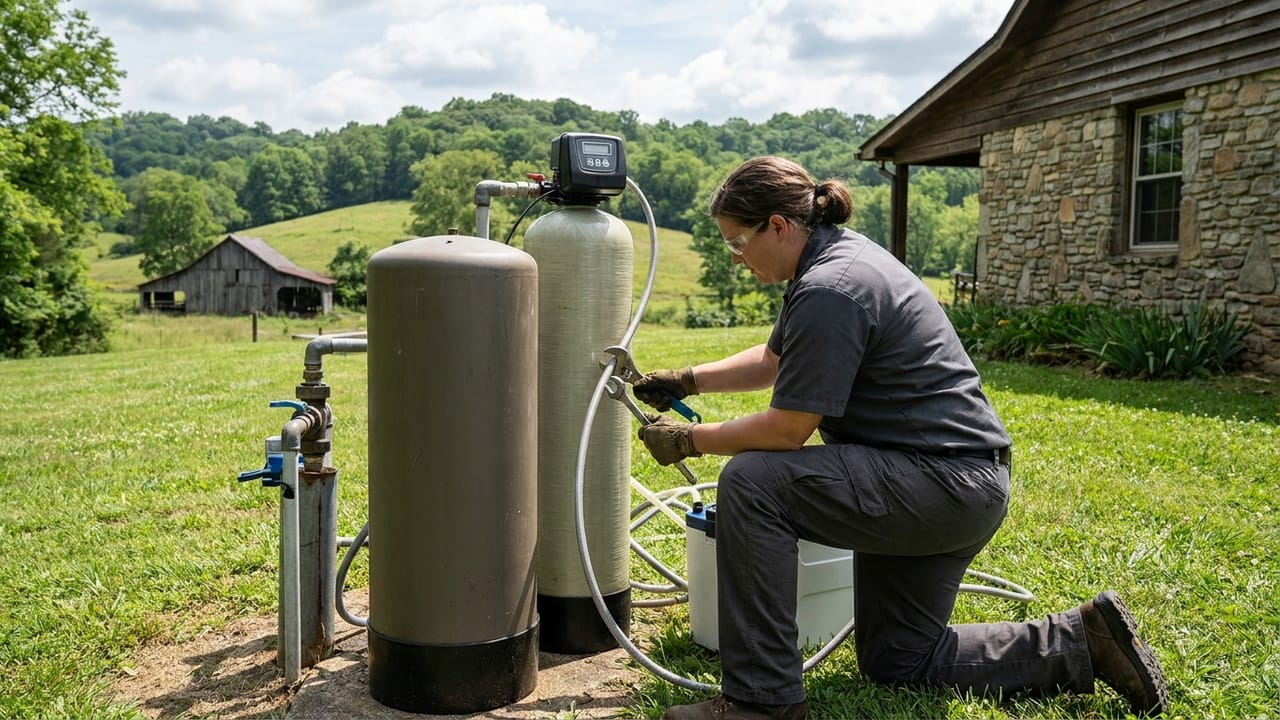
Well Water Treatment
Iron, sulfur, sediment and bacteria addressed in the right sequence, which matters more than any single unit.
Learn more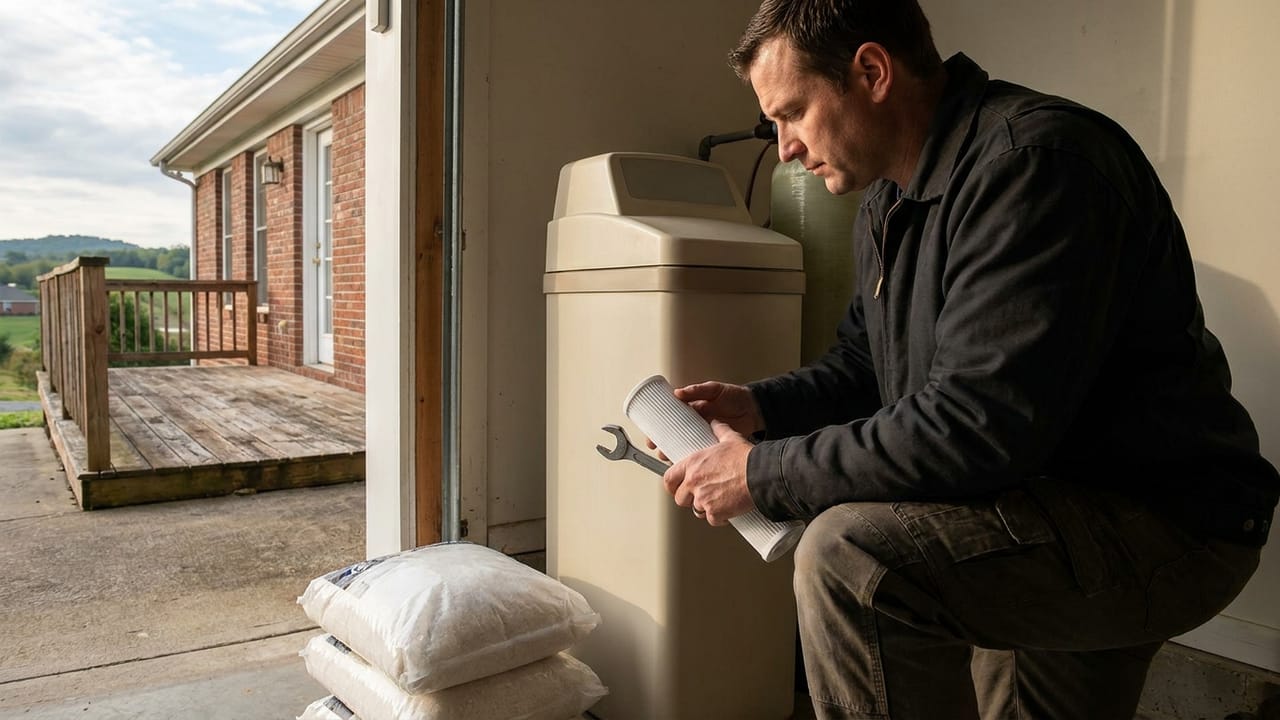
Service, Filters & Salt
Filter changes, media replacement, sanitizing and salt delivery on a schedule so the system keeps working.
Learn moreHow it works
Test the water, read the numbers, size the system
Tell us what is happening
Send the form; describe it in your own words.
Get a free written estimate
One of our water treatment specialists looks at the work and gives you a scope and a price in writing, with no obligation to go ahead.
We do the work
Agreed price, tidy site, workmanship in writing. Not right afterwards? We come back.
Why trust us
No scare sales: what we will and will not do
No reviews on this site yet — a company this new has none to show, and the water business has enough scare-sales without borrowed praise.
-
Test before quoting
Hardness, iron, chlorine, pH and, on a well, bacteria and nitrates; the numbers decide the system.
-
Size to the house
Grains of hardness times gallons per day sets the softener; flow rate sets the filter; the family sets the RO.
-
Write the service schedule
Salt, filters and media have a life, and the schedule and its cost are in the quote.
-
Sell a system without a test
A softener for water that is not hard is a monthly salt bill for nothing.
-
Oversize for the commission
A bigger tank is not better; it regenerates less efficiently and costs more.
-
Ignore the drain
A softener discharges brine and needs a proper drain; it is not run into the yard.
Middle Tennessee
Limestone, city water and wells: treating Tennessee water
Middle Tennessee sits on limestone, and limestone is what makes water hard. Municipal supplies across the region are moderately hard as a rule — enough to scale fixtures, shorten water heater life and leave film on glassware — which is why softening is the most common treatment here rather than an unusual one. It is a genuine equipment-life question as much as a comfort one.
Private wells are common as soon as you leave the denser suburbs, particularly through Wilson, Dickson, Cheatham and rural Williamson County, and well water in this region frequently carries iron, sulfur or both. Those produce the orange staining and the rotten-egg smell people describe, and they are treated in a specific sequence — getting the order wrong means the last stage does the work of all of them and fails early.
Service area
Water we test from the city to the county wells
We test and install in Nashville and 64 additional towns in 12 counties. On city water or a well, a Middle Tennessee home no farther than about an hour from Nashville is covered.
FAQ
Hardness, RO and filters: questions answered
How much does water treatment cost in Nashville?
Water treatment in Nashville is priced by the equipment the test calls for — a softener sized by hardness and household, a whole-house filter by flow, reverse osmosis by the tap — plus the installation and the service schedule, all on one quote after the test.
How fast can you get someone out?
A water test in Nashville is usually within the week; the equipment installs in a day once it arrives, and the service visits follow the schedule in the quote.
What areas do you cover?
Water treatment specialists serving Nashville also cover Franklin, Brentwood, Murfreesboro, Hendersonville; the routes run through 65 towns in 12 counties.
Are you licensed and insured?
Every water treatment specialist on our crews carries liability insurance on file with us and installs through a licensed plumber where the connection requires one.
Do you charge for an estimate?
No — free, written, and no obligation.
What if something goes wrong afterwards?
Send the form; the workmanship is backed in writing.
Is Nashville water hard?
Moderately, yes. Middle Tennessee sits on limestone, so the water carries dissolved calcium and magnesium. It is safe to drink, but it is what leaves spots on glasses and fixtures, shortens water heater life through scale, and stops soap lathering properly. It is a nuisance and a maintenance cost rather than a health issue.
What is the difference between a water softener and a filter?
A softener removes the calcium and magnesium that cause hardness, using ion exchange and salt. A filter removes other things — chlorine, sediment, taste and odor, and depending on the type, specific contaminants. They solve different problems, and a house with hard chlorinated water needs both. Buying a filter to fix scale, or a softener to fix taste, is the common mistake.
Why does my water smell of chlorine or rotten eggs?
Chlorine smell is the municipal disinfectant and is removed easily with a carbon filter. A rotten-egg smell is hydrogen sulphide, and on city water it usually comes from bacteria in the water heater rather than the supply — often fixed by flushing and raising the temperature or replacing the anode rod. On well water it more often comes from the source and needs treatment.
Do I need a whole-house system or just under the sink?
Under-sink handles drinking and cooking water at one tap and is far cheaper. Whole-house treats everything — showers, laundry, appliances and the water heater — which is what you want if the problem is scale or chlorine affecting skin, fixtures and equipment. If the concern is only how the drinking water tastes, a point-of-use filter is the proportionate answer.
How often does a water treatment system need servicing?
Softeners need salt topped up regularly and a check annually. Sediment and carbon filters are replaced on a schedule, typically every three to twelve months depending on the cartridge and water quality. Reverse osmosis membranes last a few years. A system that is never serviced eventually does nothing, which is how households end up with soft-water plumbing and hard-water symptoms.
Free estimate
Want your Nashville water tested?
Tell Nashville's Water Filtration what you notice in the water and whether it comes from the city or a well. A written estimate follows, free, and you owe nothing for asking.