
· by Michael Blair, Nashville's Water Filtration
Whole-house and point-of-use systems solve different problems. Choosing between them starts with what you are actually trying to fix.
What is a whole-house water filter for?
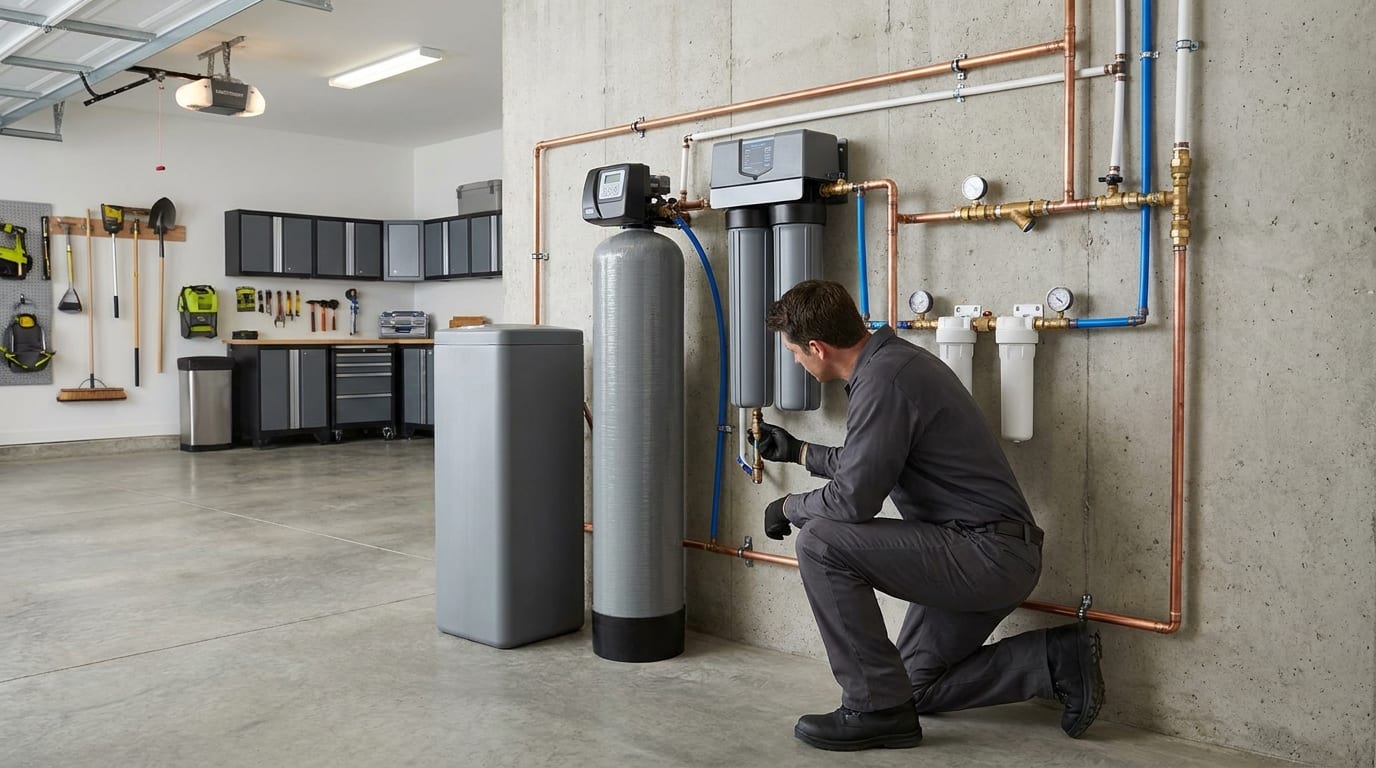
Problems affecting every fixture: sediment, chlorine odor in the shower, and anything that damages plumbing or appliances. Softening is inherently whole-house.
It treats a large volume, so cartridges are larger and replacement intervals longer, and installation involves the main line.
What is an under-sink filter for?
Drinking and cooking water. An under-sink carbon block or reverse osmosis system treats the small volume you actually consume, to a much higher standard, for far less money.
Reverse osmosis in particular is impractical whole-house because it wastes water and produces slowly.
- Sediment, chlorine odor, appliance protection: whole-house
- Drinking and cooking quality: point-of-use
- Reverse osmosis: under sink only, not whole house
- Softening: whole-house by nature
- Many houses want a sediment filter plus an under-sink unit
The common sensible combination
A whole-house sediment filter and carbon for chlorine, a softener if hardness justifies it, and an under-sink unit for drinking water.
That covers appliance protection, shower and laundry quality, and drinking water without paying to purify water used to flush toilets.
Maintenance is the deciding factor
Every system has cartridges with a replacement interval, and a neglected filter is worse than none — it becomes a restriction and a place for bacteria.
Choose a system you will actually maintain. Under-sink cartridges are easy; a whole-house housing in a crawl space gets forgotten.
FAQ
Whole-House Filtration or Under the Sink — questions
Do I need whole-house filtration?
Only for problems affecting every fixture — sediment, chlorine odor in the shower, or protecting appliances. If the goal is better drinking water, an under-sink system treats the small volume you consume to a much higher standard for far less money.
Can reverse osmosis be installed whole-house?
It is impractical. Reverse osmosis produces slowly, wastes water in the process and would need a large storage tank and a pump to serve a house. It is designed as a point-of-use technology for drinking and cooking water, and that is where it makes sense.
How often do filters need changing?
It varies by type and water quality, from a few months for a sediment cartridge on dirty water to a year or more for a large carbon block. A neglected filter is worse than no filter — it restricts flow and becomes a place for bacteria — so choose a system whose maintenance you will actually keep up.
Do I need both a water softener and a filter?
Only if your water calls for both, because they do different jobs. A softener deals with hardness throughout the house, while a filter handles sediment, chlorine or the water you drink. A common setup is a whole-house sediment and carbon filter, a softener where a hardness test justifies it, and an under-sink unit for drinking water.