
· by Michael Blair, Nashville's Water Filtration
Softeners are sold on skin and hair and bought most sensibly for what hard water does to equipment. In Middle Tennessee the appliance argument is the stronger one.
What does hard water do to appliances?
Scale insulates the burner or element in a water heater, so it runs longer for the same output and fails sooner. In a tankless unit scale restricts the heat exchanger and triggers faults.
Beyond that: scaled aerators and shower heads, cloudy glass, more detergent needed, and shorter life on dishwashers and washing machines.
How does a water softener work?
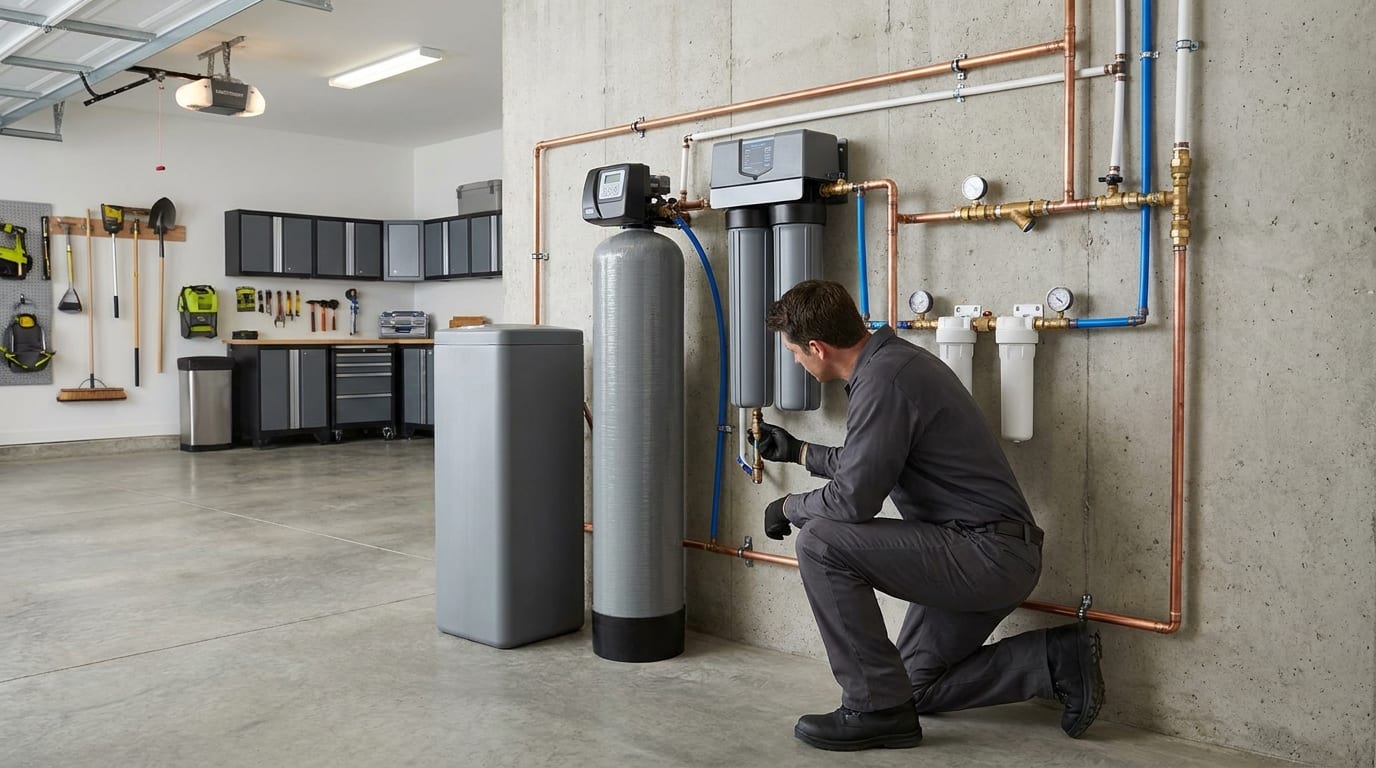
Ion exchange swaps calcium and magnesium for sodium, and the resin is periodically regenerated with brine. That means a salt supply, a drain connection and a regeneration cycle.
Salt-free conditioners do not remove hardness; they alter how it crystallizes so it is less likely to adhere. They are simpler and less effective, and they add no sodium.
- Ion exchange removes hardness; conditioners only alter it
- Needs salt, a drain and space
- Adds a small amount of sodium to the water
- Leave one tap unsoftened for drinking and plants
- Roughly doubles the tankless descaling interval
The sodium question
Softening adds sodium in proportion to the hardness removed. For most people the amount is small relative to diet, and for anyone on a restricted intake it is worth discussing.
The usual arrangement is leaving the kitchen cold tap unsoftened for drinking and cooking, which also suits houseplants and garden use.
Running cost
Salt, water used in regeneration, and occasional servicing. Metered units regenerate based on actual use rather than a timer, which reduces both.
Against that, longer appliance life and less detergent. In Middle Tennessee, most households who fit one find the arithmetic reasonable, particularly alongside a tankless heater.
FAQ
Is a Water Softener Worth It Here — questions
Does soft water taste different?
Many people notice a slightly different mouthfeel, sometimes described as slippery, and a mild change in taste from the added sodium. The usual arrangement is leaving one kitchen tap unsoftened for drinking and cooking, which sidesteps the question entirely.
Are salt-free water conditioners effective?
They do not remove hardness — they alter how the minerals crystallize so scale is less likely to adhere. That helps with scale build-up to a degree and does nothing for the soap and detergent effects of hard water. They are simpler with no salt and no drain, and they are a partial solution rather than an equivalent one.
Will a softener help my tankless water heater?
Substantially. Scale in the heat exchanger is the main failure mode for tankless units in hard water, and softening roughly doubles the interval between descaling flushes. If you are installing tankless in Middle Tennessee, pricing a softener at the same time is worthwhile.
Is softened water safe to drink?
For most people, yes. Softening adds sodium in proportion to the hardness it removes, and the amount is small next to what a normal diet holds, though anyone on a restricted intake should discuss it. The usual setup leaves the kitchen cold tap unsoftened for drinking and cooking, which also suits houseplants.